The Mindsets Needed to Succeed in the Future
The future will not be won by intelligence alone.
It will not be won simply by faster machines, larger data sets, better forecasts, or more efficient organizations. Those things will matter, but they will not be enough. The future will be shaped by the quality of human mindset guiding the use of power, technology, information, and speed.
That is the deeper lesson beneath the age of acceleration.
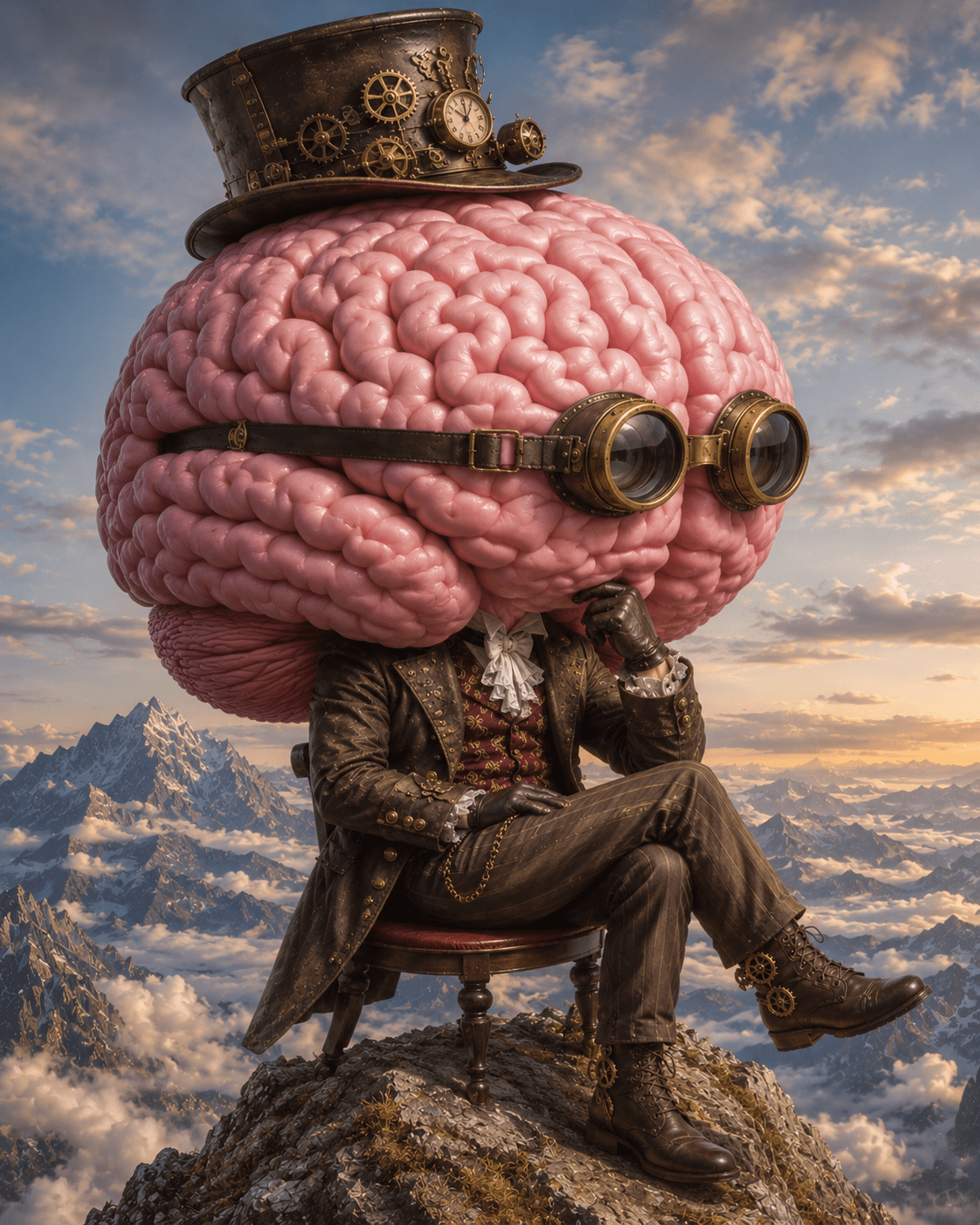
We are entering a world where artificial intelligence thinks faster than humans, markets react faster than institutions, information spreads faster than wisdom, and systems change faster than many people can emotionally absorb. Leaders are no longer operating in a stable environment where experience alone is enough. They are operating on a mountaintop of complexity, exposed to storms of uncertainty, with a fragile human mind trying to make sense of forces larger than itself.
This is why mindset matters.
A mindset is not simply an attitude. It is the interpretive lens through which a person sees reality. It shapes what leaders notice, what they ignore, what they fear, what they trust, and what they believe is possible. In a slow world, poor mindsets may remain hidden. In a fast world, they become dangerous.
The wrong mindset can turn intelligence into arrogance, speed into recklessness, innovation into extraction, and strategy into denial. The right mindset can turn uncertainty into learning, pressure into discipline, technology into service, and complexity into a field of possibility.
The first mindset future leaders need is grounded realism. This is the ability to see reality clearly without falling into panic, cynicism, ideology, or fantasy. Grounded realism says: “Let us tell the truth about what is happening, but not surrender our ability to act.” It protects leaders from both denial and despair.
The second is adaptive curiosity. In the future, expertise will still matter, but rigid expertise will become fragile. Leaders must remain teachable. They must ask better questions, update assumptions, explore weak signals, and learn across disciplines. The leader of the future is not the person who knows everything, but the person who can keep learning as reality changes.
The third is systems awareness. Nothing important now happens in isolation. An AI decision is also a workforce decision, an ethics decision, a trust decision, a governance decision, and often an ecological decision. Systems awareness helps leaders see feedback loops, unintended consequences, and hidden dependencies before they become crises.
The fourth is signal discernment. We live in an age of information abundance but meaning scarcity. Leaders must learn to distinguish signal from noise, truth from manipulation, urgency from distraction, and wisdom from emotional amplification. In the future, advantage will come not from consuming more information, but from interpreting it better.
The fifth is ethical centering. As machines become more powerful, human moral responsibility becomes more important, not less. Leaders must preserve integrity, fairness, dignity, and trust under pressure. Without ethical centering, organizations may become efficient but illegitimate, intelligent but inhumane, powerful but unsafe.
The sixth is temporal awareness. Humans live in human-time. Machines operate in digital-time. Strategy increasingly depends on future-time. Leaders must understand all three. They must know when to accelerate, when to pause, when to let people recover, and when to protect limited Transformational Energy Units. A system that moves faster than humans can metabolize will eventually degrade the people inside it.
The seventh is stewardship. The future cannot be led by extraction alone. Leaders must ask what they are preserving, strengthening, and passing forward. Stewardship shifts leadership from short-term optimization to long-term viability. It recognizes that trust, attention, human capacity, legitimacy, and ecological resilience are not infinite resources.
Finally, leaders need polyintelligent thinking. The future requires the deliberate braiding of human, machine, and ecological intelligence. Human intelligence contributes judgment, ethics, empathy, creativity, and meaning. Machine intelligence contributes speed, memory, simulation, and pattern recognition. Ecological intelligence contributes limits, interdependence, resilience, and long-range consequence.
The future will punish leaders who worship only one intelligence.
Human intelligence without machine augmentation may become too slow. Machine intelligence without human judgment may become dangerous. Human and machine intelligence without ecological awareness may become unsustainable.
The leader of the future must sit, like the great pink brain on the mountaintop, surrounded by vast forces and limited by a small chair. The image is humorous, but the metaphor is serious. The human mind is extraordinary, but it is also finite. It needs tools, perspective, rest, discipline, and better operating environments. It cannot carry infinite complexity alone.
That is why the real leadership task is not simply to become smarter. It is to build a library of useful mindsets.
Grounded realism for truth.
Adaptive curiosity for learning.
Systems awareness for complexity.
Signal discernment for clarity.
Ethical centering for trust.
Temporal awareness for pacing.
Stewardship for responsibility.
Polyintelligence for integration.
These mindsets do not guarantee success, but they increase the odds of human flourishing in a difficult future. They help leaders remain coherent under pressure, responsible under speed, and humane inside increasingly powerful systems.
The future will not be shaped only by what we build.
It will be shaped by the mindsets we bring to the building.
Discover more from The Future - With Kevin Benedict
Subscribe to get the latest posts sent to your email.